I hate to keep beating up on our man Kollias— well, I'm not beating up on him, I'm making serious points about music... OK, I wasn't making a serious point about music with the last thing, but I am now. And it's not about him personally; he's an incredible performer-athlete who happens to be working within a genre I believe is basically artistically bankrupt. But hearing today's piece in that context really gets you thinking about the true meaning of the much-abused phrase “less is more.”
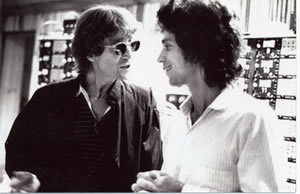
The song is Isolation, from John Lennon's Plastic Ono Band record, with Ringo Starr on drums. The production here is stripped down, and while it's a virtually perfect expression of pop craft, it hardly seems made for public consumption. I'm thinking about the difference between this and that metal thing, and all I can think is of walking through the Louvre and seeing a 15 foot high painting by somebody like Delecroix; the frame alone weighs 800 pounds. I'm not being effusive, that's just straightforward analogy— this is objectively a heavier, more impactful piece of work.
Obviously, the rhythm section here is all about the quarter notes. The only subdivisions happening are occasional triplets in the piano, which often happen at the same time as the straight 8th notes on the hihat. The vocal line has a lot of legato 16th notes, both straight and swung; on the drums the 16ths are strongly swung. Crash cymbal hits that are unaccented are just touches. The mood is soft, but the drums are played strongly enough to get a tone. As with our last Ringo/Lennon transcription, the drums track the dynamics of the piano and vocals closely. Ringo is really listening. He also leaves the heavy emotion to the vocals; he doesn't overplay, trying to match its intensity.
Get the pdf
Audio after the break:
Showing posts with label John Lennon. Show all posts
Tuesday, February 18, 2014
Wednesday, July 06, 2011
Transcription: Ringo Starr - God
Download the pdf
YouTube video of the track after the break:
1984 Modern Drummer interview: Andy Newmark
Here are some excerpts from another great Modern Drummer interview from my youth, this time with session drummer Andy Newmark, drummer on Sly Stone's Fresh
, John Lennon's Double Fantasy
, David Bowie's Young Americans
, and much more. Here he discusses studio greats Jim Keltner and Jim Gordon- who he has worked with closely, his time with George Harrison and John Lennon, and the craft of drumming on records:
THE GOODNESS of KELTNER and GORDON:
It's a feeling that makes other musicians, and producers, feel musically comfortable. They're able to play that real simple stuff with a conviction that makes it work. If you don't see the beauty in playing simple and get off on it, then when you do it, it won't come off like the person who loves to do it. When Russ Kunkel, Gordon or Keltner would just play those real simple beats, they got off on it. They liked that; they were into it, so it gave the notes validity.
Also, I noticed on the playback that all of the takes- not just the final one- sounded like real records. Whereas often, when I'd hear a playback of something I was doing, a lot of little things would make it feel, to me, like a demo. When I heard them play on something, it always seemed to be so smooth. They had a way of making everything settle and be relaxed. The hardest thing to get a studio drummer to do is make the record feel it's in the right place. Tempo has a lot to do with good records. Being slightly too fast or too slow might cause the whole song to miss the point. And I think producers rely on drummers to find that magical place, within a very small range of tempo. It's something that most people might not hear. There isn't a large difference in those tempos, but it's that one magical place that makes it feel like everything's breathing properly. I started picking up on an inner instinct from these guys that they knew where to put the tempo, and believed in it themselves. They weren't looking for direction- they were the direction; they were the core.
Extended excerpts plus a couple more of Newmark's tracks after the break:
THE GOODNESS of KELTNER and GORDON:
It's a feeling that makes other musicians, and producers, feel musically comfortable. They're able to play that real simple stuff with a conviction that makes it work. If you don't see the beauty in playing simple and get off on it, then when you do it, it won't come off like the person who loves to do it. When Russ Kunkel, Gordon or Keltner would just play those real simple beats, they got off on it. They liked that; they were into it, so it gave the notes validity.
Also, I noticed on the playback that all of the takes- not just the final one- sounded like real records. Whereas often, when I'd hear a playback of something I was doing, a lot of little things would make it feel, to me, like a demo. When I heard them play on something, it always seemed to be so smooth. They had a way of making everything settle and be relaxed. The hardest thing to get a studio drummer to do is make the record feel it's in the right place. Tempo has a lot to do with good records. Being slightly too fast or too slow might cause the whole song to miss the point. And I think producers rely on drummers to find that magical place, within a very small range of tempo. It's something that most people might not hear. There isn't a large difference in those tempos, but it's that one magical place that makes it feel like everything's breathing properly. I started picking up on an inner instinct from these guys that they knew where to put the tempo, and believed in it themselves. They weren't looking for direction- they were the direction; they were the core.
Extended excerpts plus a couple more of Newmark's tracks after the break:
Subscribe to:
Posts (Atom)