While I figure out how to work Musescore, here's some Art Ensemble of Chicago. My German friends told an interesting story last year about how they got all of this Paiste gear... by some rather ruthless means. Not all musicians are real nice guys. Still, I enjoy the music.

A drumming blog written by Todd Bishop.
Showing posts with label avant-garde. Show all posts
Showing posts with label avant-garde. Show all posts
Thursday, August 29, 2024
Daily best music in the world: Art Ensemble of Chicago - 1983


Wednesday, September 25, 2019
Very occasional quote of the day: mistakes

- John Cage
Sunday, September 23, 2018
Daily best music in the world: Ronald Shannon Jackson with Albert Ayler
Ronald Shannon Jackson playing with Albert Ayler on the Live at Slug's Saloon album, recorded in 1966. Jackson wasn't recorded a lot at this stage of his career, and it's really interesting to hear him do the same relentless rolling thing we heard him do on a giant Sonor set in the 80s. Clearly he's more technically able than some other avant-garde drummers of the period— people who may have been going for an emotional intensity that was beyond their capabilities. Jackson also has a stronger sense of pulse than most of them— it's like listening to a mediocre bass player with weak harmonic sense play this music (another common situation), and then listening to Gary Peacock play it. It's like oh, this guy is playing off a pulse. He's a real drummer.
Jackson plays with real power, and he's obviously a strong listener. It reminds me a lot of Jack Dejohnette playing avant-garde. There's just a different quality when a real technically and musically able drummer does this kind of thing. There's more energy and more evident creativity happening; more melodic awareness.
He is awesome playing with Cecil Taylor a dozen years later, too. Cecil can be kind of punishing to me; Jackson humanizes him.
Jackson plays with real power, and he's obviously a strong listener. It reminds me a lot of Jack Dejohnette playing avant-garde. There's just a different quality when a real technically and musically able drummer does this kind of thing. There's more energy and more evident creativity happening; more melodic awareness.
He is awesome playing with Cecil Taylor a dozen years later, too. Cecil can be kind of punishing to me; Jackson humanizes him.
Friday, June 08, 2018
MY NAME IS PABLO PICASSO
Digging through my old cassettes I found this rather hilarious avant-garde thing I composed in 1991 on a then-fancy HR-16 drum machine, doing with it things entirely unintended by the technicians at Alesis. It's called MY NAME IS PABLO PICASSO, a suite in five movements.
This took me quite a few hours to make. At the time I was listening to a lot of John Zorn, so the movements are all extremely short; and to a lot of Ornette Coleman, especially the album Song X, so it is very dense. I performed it at a jazz combo concert at the University of Oregon, and I think half the people thought the sound system was malfunctioning, but a girl did approach me in the art library the next day to say she liked it. Turn it up loud to get the full effect...
This took me quite a few hours to make. At the time I was listening to a lot of John Zorn, so the movements are all extremely short; and to a lot of Ornette Coleman, especially the album Song X, so it is very dense. I performed it at a jazz combo concert at the University of Oregon, and I think half the people thought the sound system was malfunctioning, but a girl did approach me in the art library the next day to say she liked it. Turn it up loud to get the full effect...
Sunday, January 14, 2018
Paul Motian podcast

There's a lot of music here— they've been posting weekly since early 2016— but I'm most excited about the rehearsal tapes with Charles Brackeen and David Izenson, and with Bill Frisell and Joe Lovano, and the home recordings with Masabumi Kikuchi. There's seriously a ton of stuff. Go there now and download it all. There's also a blog connected with the podcast, and a book of Motian tunes available.
Saturday, May 23, 2015
Daily best music in the world: Andrew Cyrille with Grachan Moncur III
Just a nice track from a record I've never heard, by Moncur, a famous trombonist, with Andrew Cyrille on the drums:
Tuesday, May 05, 2015
Ornette live in '58
Here's something remarkable: Ornette Coleman recorded live in LA in 1958, just before his big national exposure in New York. The band includes the musicians in his famous quartet: Don Cherry, Charlie Haden, and Billy Higgins, plus Paul Bley on piano. They had all been playing together a lot at this point, but like the album from '58, Something Else!, it does sound on-the-cusp; after the famous, long-running gig at the Five Spot in 1960, the band just sounds bigger and more confident in their thing. Or, hell, maybe they sounded amazing in '55 and just started getting recorded better. Don Cherry sounds great here.
Tunes are:
1. Klactoveedsestene
2. I Remember Harlem
Tunes are:
1. Klactoveedsestene
2. I Remember Harlem
3. The Blessing
4. Free
5. Ramblin' (possibly my favorite Ornette Track ever, from Change of the Century)
6. How Deep Is The Ocean?
7. When Will The Blues Leave?
8. Crossroads
4. Free
5. Ramblin' (possibly my favorite Ornette Track ever, from Change of the Century)
6. How Deep Is The Ocean?
7. When Will The Blues Leave?
8. Crossroads
Wednesday, January 15, 2014
From the zone: The Wizard, by Albert Ayler
I've been preoccupied the last few days whipping into shape the 2013 Cruise Ship Drummer! Book of the Blog (available for order next week), so here's a quick little something from my old notebooks: a transcription of the tune The Wizard, by Albert Ayler, which I made in 1999 or so:

Here's the original audio, if you want to check my work. The album is Spiritual Unity, with Sunny Murray and Gary Peacock— if you're going to play free jazz, you need to have a smoking bassist with some classical chops:
Here's the original audio, if you want to check my work. The album is Spiritual Unity, with Sunny Murray and Gary Peacock— if you're going to play free jazz, you need to have a smoking bassist with some classical chops:
Saturday, December 28, 2013
Sunny Murray, the bebop tradition, and Milford Graves

— Sunny Murray to a young, interested, Hans Bennink
Here's an interview by Dan Warburton, with one of the original free jazz drummers, Sunny Murray. It's most interesting to me as a piece of archeology into the attitudes of these players, who seemed at the time to be making such a large break with previous music, and who are often regarded as not maintaining, shall we say, traditional technical standards. But Murray clearly feels himself to be part of the same tradition as some more mainstream players (even if McCall and Blackwell were thought of as avant-garde at the time) and having less connection to another great early free player, Milford Graves, who he felt was coming from someplace else:
[...] I like Milford a lot, but basically I have the attitude of a bebop drummer regarding what I feel about music and other drummers. Milford didn't come from bebop at all. I love Roy Brooks, and Louis Hayes with those beautiful mahogany-looking hands, Eddie Blackwell that could just swing your head off, Steve McCall was the best surprise with the left hand I ever heard, Dennis Charles he'd just chug-a-lug you for ever. [...] You know, it's traditional for a drummer to be opinionated about other drummers, because there are some basics and roots in jazz drumming and there's a whole generation today that hasn't had to deal with those rules or laws, aesthetically or spiritually, or go through the kinds of pressures I had to go through, Louis Hayes, Dennis Charles, Eddie Blackwell, Steve McCall had to go through... It wasn't something unpleasant, it was an education.
More after the break:
Wednesday, December 25, 2013
Transcription: Ed Blackwell solo — Tarik
Oh, what the hell, happy Saturnalia— I went ahead and transcribed the solo from the GOTD of a few days ago, Tarik, by Ed Blackwell, from Dewey Redman's album of the same name. It's a real study of hand independence, and not very readable, but at least roughing it out measure by measure or phrase by phrase should give you some insight into Blackwell's way of playing. At least into this tom tom thing of his, which you should recognize right away if you've heard much of his playing. The tune is basically just a drum groove, with Redman improvising freely on the musette, along with Malachi Favors on bass. Possibly the opening phrase on musette was composed.

Throughout the piece, there are many times when the snare is played with both hands in unison, or nearly so, which I've indicated with a B. I included them based on the sound, and haven't worked through them on the drums prior to posting this, so if you hit anything really unplayable, probably one of those both-handed notes is in the wrong spot. Definitely write in your own additional stickings where needed. Blackwell basically plays quarter notes with both feet in unison all the way through, though often one or both may drop out for a few beats. It doesn't matter— the main thing is the hands. The repeated lick at measure 36 gets a little sloppy, and ends with an accidentally dropped beat, hence the single measure of 3/4.
Get the pdf
Audio after the break:

Throughout the piece, there are many times when the snare is played with both hands in unison, or nearly so, which I've indicated with a B. I included them based on the sound, and haven't worked through them on the drums prior to posting this, so if you hit anything really unplayable, probably one of those both-handed notes is in the wrong spot. Definitely write in your own additional stickings where needed. Blackwell basically plays quarter notes with both feet in unison all the way through, though often one or both may drop out for a few beats. It doesn't matter— the main thing is the hands. The repeated lick at measure 36 gets a little sloppy, and ends with an accidentally dropped beat, hence the single measure of 3/4.
Get the pdf
Audio after the break:
Monday, May 14, 2012
A treasure trove: WKCR Soundscape project

Soundscape[,] a New York performance venue founded and curated by Verna Gillis. Between 1979 and 1983, Soundscape offered specialized programming of Latin Jazz, Afro-Cuban music, avant-garde improvised music, and “world music” performers from many nations. Many Soundscape shows were recorded and the library of recordings has been donated by Gillis to the WKCR permanent archives, for broadcast on air and to be made available on the web.
There are a bunch of other interesting things- a group called Commitment, featuring Denis Charles, who we talked about a few days ago, a Sunny Murray solo performance, a Rashied Ali duo concert, a very cool Tito Peunte concert, and more.
And digging a little deeper into the WKCR site, there's also a page of interviews and in-studio performances by people like Don Cherry, Milford Graves, Archie Shepp, Lee Konitz, Dewey Redman, and others. Definitely worth spending a bunch with this one.
Tuesday, May 08, 2012
DBMITW: more Cecil
This is from my other favorite Cecil Taylor record, Looking Ahead!, with Denis Charles on drums.
Charles plays his cymbal (in 1950's, at least) in a way you would have a hard time getting away with today- he really drops in the 1's and 3's. At the medium tempo blowing in the middle of this tune he plays a very "dotted-8th/16th-y" rhythm as well- which works well with Cecil's playing.
After the break is a couple of excerpts from a documentary about him that looks like it was filmed shortly before his death in 1998, and completed shortly after.
Charles plays his cymbal (in 1950's, at least) in a way you would have a hard time getting away with today- he really drops in the 1's and 3's. At the medium tempo blowing in the middle of this tune he plays a very "dotted-8th/16th-y" rhythm as well- which works well with Cecil's playing.
After the break is a couple of excerpts from a documentary about him that looks like it was filmed shortly before his death in 1998, and completed shortly after.
Sunday, April 29, 2012
DBMITW: Cecil Taylor
Here's another old free jazz favorite from my LP stacks.
Andrew Cyrille is on drums.
And the title (CONQUISTADOR!) has an exclamation point, which I like.
Monday, November 14, 2011
Barry Altschul interview
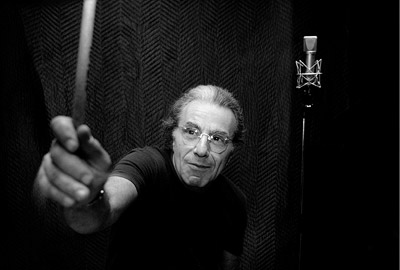
Anyhow, here are a few excerpts from a 2010 Altschul interview from Burning Ambulance, a jazz/arts blog I haven't read before. Like most interviews it's more about current events, career and listener issues, than about things drummers/artists want to know, but there are some interesting things.
Here, you can re-listen to these great clips in another tab while you read:
PIGEONHOLED
...a lot of my recording career has been what we’ll call the avant-garde. Yet a lot of my professional career has been fairly equal between playing with avant-garde people and playing with inside people, but my reputation is pretty much avant-garde. I remember once going out with Art Pepper, and we were on the road and one of the newspapers said, “The surprise of the evening was the avant-gardist Barry Altschul swinging.…”
Q: Did you ever feel any sense of regret or frustration about this idea that you had been painted into a corner?
BA: I feel frustration about it because I think that it has affected my work—not my playing but my ability to get gigs. I think a lot of people when they think of me, think of me a certain way and feel that they can’t think of me another way.
[...] I do know that certain musicians who are close friends of mine have told me that other people have asked them about my abilities. “Can he play time more than three bars in a row?” Or, “Can he really swing?” There have been some of those questions asked to friends of mine who came back to me and told me that.
FREE vs. BOP
I remember one time, playing at Slug’s with Paul Bley. I’m not going to mention names, but one of the more established trumpet players almost got physically violent [when he heard] the music that was being played. He was very upset that we could do that to music.
...the more inside musicians felt that the players that were playing more out had to establish themselves first. They felt, I think, that you had to prove yourself that you can play a certain way before you took the liberties of extending.
Continues after the break...
Subscribe to:
Posts (Atom)