Here's a nice video of part of an interview with Bill Stewart, speaking with Quincy Davis of the University of Manitoba, in which he discusses his cymbal technique. It relates to my earlier ranting and raving about technique in that the conversation is entirely about sound— nothing about speed or high performance in here anywhere. Nothing about technique in the abstract. It's all about getting a sound he seeking from a cymbal he was using at the time.
The rest of the interview is great, too.

A drumming blog written by Todd Bishop.
Showing posts with label ride cymbal. Show all posts
Showing posts with label ride cymbal. Show all posts
Monday, March 19, 2018


Wednesday, May 20, 2015
Species of ride cymbal interpretation in jazz
Following up on George Collligan's commentary on this subject: The way you play the cymbal pattern is really the center of your artistry as a jazz drummer, so let's do a little survey of the ways of interpreting it— the variations in accenting and rhythm people do to make their personal thing, and to do their job within the ensemble.
I've written the patterns in the now-standard triplet form, but swing rhythm is more complicated than that; even more so with swing rhythm on the cymbal, which can vary dramatically depending on the player, the tempo, and the style. That's beyond the scope of what we're talking about here— just don't be too triplet-fixated in your swing interpretation.
And don't overdo it with the accenting; if you listen to the music, it's fairly subtle the way the players do these things. You have to find a musical balance: if the accent obliterates the other notes of the pattern, you'll be blowing a hole in your time feel. And the cymbal is going to be making this pattern all night, and if you're hammering the 2 and 4, well, people's ears will get tired of that after the fourth or fifth hour.
50s / bop / Blakey-like
For a long time this driving interpretation was just the way you played the cymbal. This is generally played repetitively, with a moderate-to-strong accent on 2 and 4. Listen to Art Blakey, Max Roach, Kenny Clarke, Paul Motian, Philly Joe Jones, Art Taylor, and many others.

In attempting be “loose”, it's easy to play the unaccented notes sloppily, which can drop the bottom out of groove— so, articulate the 1 and 3 even as you accent the 2 and 4. This interpretation is usually supported by a consistent, strong hihat on 2 and 4, so, again, it's not necessary to overdo the accent on the cymbal.
Quarter note pulse
In recent years I've been favoring this as my default way of playing jazz time. It communicates a strong groove to the other musicians and to the audience. I've heard it be effective even when a drummer's cymbal pattern doesn't sound very swinging by itself— as soon as the band comes in, it sounds great.

I don't know if this feeling is accurate, but it seems to me that I've most seen this approach in veteran players who were young in the 70s and 80s, when big-drum Tony Williams influence was at its peak. Younger players seem to favor the other styles, and you can really sound different if you emphasize and sustain this type of feel. That's just my impression— maybe it's BS.
Elvin-like
Accenting the “skip” note, sometimes “ghosting” or omitting the note after the accent. Everyone does this today, but it was once very special. When I figured out that it was a thing, I thought I was the only person in the world doing it. This is especially helpful in making a two feel without sounding hokey. It also tends to make the music lay back, so you can deploy this if you need to make that happen. Doing this in an exaggerated, overly-regular, over-practiced way can easily sound stylized, so beware.

This is often done in a mixed rhythm, with a strong pull towards a dotted quarter note pulse:

Listen to drummers who do this interpretation, especially Elvin Jones, and in the 1960s and later, Pete LaRoca and Roy Haynes. In his jazz playing with Chick Corea, Steve Gadd does a form of this, with a legato, tending-towards-straight-8th swing interpretation.
Continued after the break:
I've written the patterns in the now-standard triplet form, but swing rhythm is more complicated than that; even more so with swing rhythm on the cymbal, which can vary dramatically depending on the player, the tempo, and the style. That's beyond the scope of what we're talking about here— just don't be too triplet-fixated in your swing interpretation.
And don't overdo it with the accenting; if you listen to the music, it's fairly subtle the way the players do these things. You have to find a musical balance: if the accent obliterates the other notes of the pattern, you'll be blowing a hole in your time feel. And the cymbal is going to be making this pattern all night, and if you're hammering the 2 and 4, well, people's ears will get tired of that after the fourth or fifth hour.
50s / bop / Blakey-like
For a long time this driving interpretation was just the way you played the cymbal. This is generally played repetitively, with a moderate-to-strong accent on 2 and 4. Listen to Art Blakey, Max Roach, Kenny Clarke, Paul Motian, Philly Joe Jones, Art Taylor, and many others.

In attempting be “loose”, it's easy to play the unaccented notes sloppily, which can drop the bottom out of groove— so, articulate the 1 and 3 even as you accent the 2 and 4. This interpretation is usually supported by a consistent, strong hihat on 2 and 4, so, again, it's not necessary to overdo the accent on the cymbal.
Quarter note pulse
In recent years I've been favoring this as my default way of playing jazz time. It communicates a strong groove to the other musicians and to the audience. I've heard it be effective even when a drummer's cymbal pattern doesn't sound very swinging by itself— as soon as the band comes in, it sounds great.

I don't know if this feeling is accurate, but it seems to me that I've most seen this approach in veteran players who were young in the 70s and 80s, when big-drum Tony Williams influence was at its peak. Younger players seem to favor the other styles, and you can really sound different if you emphasize and sustain this type of feel. That's just my impression— maybe it's BS.
Elvin-like
Accenting the “skip” note, sometimes “ghosting” or omitting the note after the accent. Everyone does this today, but it was once very special. When I figured out that it was a thing, I thought I was the only person in the world doing it. This is especially helpful in making a two feel without sounding hokey. It also tends to make the music lay back, so you can deploy this if you need to make that happen. Doing this in an exaggerated, overly-regular, over-practiced way can easily sound stylized, so beware.

This is often done in a mixed rhythm, with a strong pull towards a dotted quarter note pulse:

Listen to drummers who do this interpretation, especially Elvin Jones, and in the 1960s and later, Pete LaRoca and Roy Haynes. In his jazz playing with Chick Corea, Steve Gadd does a form of this, with a legato, tending-towards-straight-8th swing interpretation.
Continued after the break:
Saturday, May 09, 2015
George Colligan on playing the ride cymbal
 |
| THAT cymbal— listen and copy the sound. |
The ride cymbal is the most important part of a jazz beat. I would say that almost every other group I listened to in Reno had the same issue; on a swing beat, the ride cymbal was being accented on 1 and 3, rather than 2 and 4, and the hi hat was being used as a crutch to keep the 2 and 4 prominent.
Now, I'm not saying that 2 and 4 have to be super loudly accented on the cymbal, and that you should never play the hi hat on 2 and 4. It's more subtle. To my ears, a strong accent on 1 and 3 on the cymbal sounds less than optimal( i.e. not swinging). Every jazz drummer from Max Roach to Jimmy Cobb to Billy Higgins to Ralph Peterson to Bill Stewart has a different way of riding on the cymbal. But I believe in all of the great jazz drummers, the ride cymbal beat is what makes them distinctive, and what makes the music flow the best. We can identify jazz drummers by their solo vocabulary around the kit also, but the great jazz drummers were and are in demand because of the feeling they gave the groove of the music, not because of their solos!
I was on the road recently with Bill Stewart, and I think we were talking about rudiments, and Stewart said something like, "You might know all the rudiments but if you don't get the ride cymbal together, nobody is going to call you! So the point is, the ride cymbal has to feel good. Don't worry so much about the rest of the kit; I would rather have the ride cymbal be good than having someone play all around the kit without good time.
There's more good stuff on other subjects in the post, and I suggest you head over to Colligan's Jazz Truth blog and give it a read.
It's probably time for a little in-depth discussion on how to play the ride cymbal. It's not the 50s anymore, and we don't have the luxury of just being in the present and doing our one thing; we have to be able to cover ~50 years of history like we invented it. There are a number of popular cymbal interpretations, all of which I may use in the course of an evening's playing. Coming soon...
Wednesday, August 27, 2014
“Skiplet”?
In some ways I feel I'm watching (and contributing to) the death of the familiar jazz ride cymbal pattern as a musical thing, for a lot of reasons, but partly as the result of a whole lot of practice room abuse by uncommitted players. Lots of drummers are working on it, but very few of them are even listening to much actual jazz music, let alone making music with it. It's becoming just an obligatory drummer-thing, and we're starting to see people feeling free to invent their own stylized way of playing it, and making their own totally wrong pronouncements about it, seemingly without fear of being corrected by actual jazz musicians.
So I have mixed feelings about going further with the theory of it in an open setting like this. I don't really want to teach non-jazz musician teachers how to fake out their students better. But for all the people of noble purpose out there, this is one I've been working on for awhile:
The way I learned all my basic jazz coordination was through brute force; my teacher pointed me at some pages of Reed or Chapin, said “learn that”, and cut me loose to go figure it out how to play them. I didn't have any kind of system for doing that, so I just kept hacking away at them until I got it. There may be benefits to doing it that way, but it left me susceptible to weak spots in my playing— certain little coordinational things I learned well enough to get through the page, but not really well enough to be able to use in real playing.
To remedy that, in my own teaching, I want to have absolute clarity on all the little internals of the idea, and came up with my “kernel” theory of practice, in which you isolate clusters of notes, and coordinate around them. With jazz, that means using a single time through the basic unit of the pattern, “2, &-3” (or “4, &-1”, if you prefer):

Now, I don't like the idea of giving everything in music a name— I think it's orthodoxy-creating— but I've also wasted a lot of time and confused a lot of students calling the above thing “the 2, &-3”, or “the ding-da-ding”, and I wanted an easier way to refer to it as a discrete entity. Kind of like the tresillo in Salsa music. Tresillo means triplet, and refers to the three notes on the “3” side of clave. The middle note of the jazz pattern is sometimes called the skip note, so it only took a minute for my little rat-brain to come up with the word skiplet.
...
Stupid? Yes, it's stupid, but I can't be bothered with that. Jazz theory is full of made-up shit. Just be aware that it's something I made up, and if go into your next lesson with Billy Hart and say “skiplet”, he'll probably either laugh in your face or throw you out, maybe both. Soon we'll break this down a little further, looking at how you handle Chapin from a skiplet-oriented perspective...
So I have mixed feelings about going further with the theory of it in an open setting like this. I don't really want to teach non-jazz musician teachers how to fake out their students better. But for all the people of noble purpose out there, this is one I've been working on for awhile:
The way I learned all my basic jazz coordination was through brute force; my teacher pointed me at some pages of Reed or Chapin, said “learn that”, and cut me loose to go figure it out how to play them. I didn't have any kind of system for doing that, so I just kept hacking away at them until I got it. There may be benefits to doing it that way, but it left me susceptible to weak spots in my playing— certain little coordinational things I learned well enough to get through the page, but not really well enough to be able to use in real playing.
To remedy that, in my own teaching, I want to have absolute clarity on all the little internals of the idea, and came up with my “kernel” theory of practice, in which you isolate clusters of notes, and coordinate around them. With jazz, that means using a single time through the basic unit of the pattern, “2, &-3” (or “4, &-1”, if you prefer):
Now, I don't like the idea of giving everything in music a name— I think it's orthodoxy-creating— but I've also wasted a lot of time and confused a lot of students calling the above thing “the 2, &-3”, or “the ding-da-ding”, and I wanted an easier way to refer to it as a discrete entity. Kind of like the tresillo in Salsa music. Tresillo means triplet, and refers to the three notes on the “3” side of clave. The middle note of the jazz pattern is sometimes called the skip note, so it only took a minute for my little rat-brain to come up with the word skiplet.
...
Stupid? Yes, it's stupid, but I can't be bothered with that. Jazz theory is full of made-up shit. Just be aware that it's something I made up, and if go into your next lesson with Billy Hart and say “skiplet”, he'll probably either laugh in your face or throw you out, maybe both. Soon we'll break this down a little further, looking at how you handle Chapin from a skiplet-oriented perspective...
Saturday, November 02, 2013
A few new vintage Paistes
I guess the 80's is vintage now. In the past few years I've been rebuilding my cymbal collection, after ruthlessly disposing of a lot of things during a lean patch, and have largely been focusing on older Paistes. After years of listening to Billy Higgins, Jon Christensen, Paul Motian, Al Foster, and ECM recordings in general, much of the sound in my head calls for them. And, as I've written before, I've also been on a clarity kick for several years, and the 602 and Sound Creation cymbals definitely fulfill that. The thin, warm, dark, lush, pretty-sounding, quiet cymbals jazz drummers have been favoring of late, while great for recording, I've felt have led to stage volume issues— mainly, a death-spiral of quietness— as well as being-heard-by-the-audience issues. I'm still generally playing these heavier cymbals quietly, but there is enough sound here to keep players from weirding out at their own finger noise competing volume-wise with the actual music. I believe a pianissimo on these cymbals gives you a true stage pp, which is louder than a practice room pp, where your ear is a couple of feet from the instrument.
That's the back story. These tend to be expensive cymbals, but through some very patient, unemotional shopping I've been able to get them very reasonably— for about half the expected price, actually. Here they are:
 14" Sound Creation Dark Sound Edge Hihats — Black label, 1978
The sound here is dark and fairly complex, but these are very powerful cymbals, and high-pitched, the loudest hihats I've ever owned. The wavy sound edge bottom cymbal gives a very crisp, cutting foot sound. One of our local jazz guys, Ron Steen, has been using these exact cymbals and sounding great with them for years, in all settings— dinner music, vocalists, and everything. Players used to stomping on their hihat pedal would have trouble using these when any kind of delicacy is required; I've found it relaxes my whole physical set to just be able to step on the pedal and have the cymbals speak. They don't sound especially pretty by themselves from the playing position, but they blend nicely with the entire drumset, and with the rest of the ensemble.
 20" 602 Heavy — Blue Label, 1985
I've been proceeding on the assumption that there are no bad 602s, and haven't been much disappointed so far. I saw Art Blakey playing what I guessed was a 22" heavy 602 back in 1985— his ride cymbal was extremely cutting. I don't feel this cymbal fits that profile at all; it's not overpowering or especially bright, despite its weight, which actually seems to have a dampening effect. It has that very refined 602 sound, and is not too bright. It is difficult to get a clean crash out of it, which I suppose you would normally expect, except that I can get that out of my 22" Dark Rides, which are not any thinner than this. Here the crash is long, without much of a peak, and you don't get much volume. It's obviously not a quiet cymbal, but it's not really a high-volume one, either; you could hurt yourself and the cymbal trying to play it really loudly. It would probably make a beautiful sizzle cymbal, but I'm going to take a break from drilling things for the moment.
I don't know the weight in grams— maybe around 2700-2800. Close to the weight of an A. Zildjian Ping Ride, but without that model's offensive qualities.
 22" Sound Creation New Dimension Dark Ride — 1984, drilled for rivets, 3220 grams
With the acquisition of a second one of these monsters— the other being a very early 22" 602 Dark Ride— I guess I'm officially an “SCDR” guy. Certainly Paul Motian's statement that “I’ve got a few of those…” has been working on my mind. I got a very good deal on this, mainly due to the fact that it has been played a lot; the top logo is worn away, there is a keyhole that appears to have been professionally drilled, and one minor nick in the edge. Plus cymbals drilled for rivets tend to sell a lot cheaper than “virgin” ones. People are silly that way. This is a creative tool to me, not a decoration or a vanity item, and I don't give a crap about any that stuff, so I was able to pick it up for about half of the normal low-end cost for this model.
This is the New Dimension model, and I don't know how those are distinct from the regular SCs— it's an addition to the line they introduced in the 80's. There are several iterations of 22" darks at cymbal smith Matt Bettis's site, and while he notes differences, he doesn't seem to particularly value one line (602, transitional, SC, SCND) over another. Compared to my 602 Dark, the ND is darker sounding, lower pitched, and more complex, with a fatter, gong-like overtone cushion. There's a fairly pronounced shoulder built in to the cymbals profile, which gives some distinctly different-sounding playing zones— you can draw a lot of sounds out of it. Like the 602, it is capable of producing a fast, explosive crash. It's rather an intimidating cymbal— when you first sit down with it, it feels like driving a large, 70's-vintage Cadillac. It handles like a boat at first, and you definitely have to find the right touch for it.
These Dark Rides were created by Paiste in partnership with Jack Dejohnette, and I wonder if the sound he was going for was not that of Jon Christensen's famous, heavy 22" K— it seems likely they crossed paths a fair amount in Europe in the early 70's— at least they were both being produced by Manfred Eicher a lot. It's remarkable how well the Sound Creations— heavy cymbals— handle in all sorts of situations. There's a lot of hype about them; maybe it's justified, and/or being what they are, maybe I give them a chance in settings where I would normally use something lighter.
By the way, if I've talked you into spending a lot of money on these types of cymbals— well, first think twice about it; they can be very challenging cymbals to work with— and then reread my tips on buying used cymbals online, then visit the following page by Zenstat, a moderator at the Cymbalholics forum who has compiled eBay sales statistics for Paiste 602 and Sound Creation cymbals from 2006-present. That should give you a ballpark idea of what you can expect to spend, keeping in mind that used prices are trending precipitously downward from the high points in his stats right now.
That's the back story. These tend to be expensive cymbals, but through some very patient, unemotional shopping I've been able to get them very reasonably— for about half the expected price, actually. Here they are:

The sound here is dark and fairly complex, but these are very powerful cymbals, and high-pitched, the loudest hihats I've ever owned. The wavy sound edge bottom cymbal gives a very crisp, cutting foot sound. One of our local jazz guys, Ron Steen, has been using these exact cymbals and sounding great with them for years, in all settings— dinner music, vocalists, and everything. Players used to stomping on their hihat pedal would have trouble using these when any kind of delicacy is required; I've found it relaxes my whole physical set to just be able to step on the pedal and have the cymbals speak. They don't sound especially pretty by themselves from the playing position, but they blend nicely with the entire drumset, and with the rest of the ensemble.

I've been proceeding on the assumption that there are no bad 602s, and haven't been much disappointed so far. I saw Art Blakey playing what I guessed was a 22" heavy 602 back in 1985— his ride cymbal was extremely cutting. I don't feel this cymbal fits that profile at all; it's not overpowering or especially bright, despite its weight, which actually seems to have a dampening effect. It has that very refined 602 sound, and is not too bright. It is difficult to get a clean crash out of it, which I suppose you would normally expect, except that I can get that out of my 22" Dark Rides, which are not any thinner than this. Here the crash is long, without much of a peak, and you don't get much volume. It's obviously not a quiet cymbal, but it's not really a high-volume one, either; you could hurt yourself and the cymbal trying to play it really loudly. It would probably make a beautiful sizzle cymbal, but I'm going to take a break from drilling things for the moment.
I don't know the weight in grams— maybe around 2700-2800. Close to the weight of an A. Zildjian Ping Ride, but without that model's offensive qualities.

With the acquisition of a second one of these monsters— the other being a very early 22" 602 Dark Ride— I guess I'm officially an “SCDR” guy. Certainly Paul Motian's statement that “I’ve got a few of those…” has been working on my mind. I got a very good deal on this, mainly due to the fact that it has been played a lot; the top logo is worn away, there is a keyhole that appears to have been professionally drilled, and one minor nick in the edge. Plus cymbals drilled for rivets tend to sell a lot cheaper than “virgin” ones. People are silly that way. This is a creative tool to me, not a decoration or a vanity item, and I don't give a crap about any that stuff, so I was able to pick it up for about half of the normal low-end cost for this model.
This is the New Dimension model, and I don't know how those are distinct from the regular SCs— it's an addition to the line they introduced in the 80's. There are several iterations of 22" darks at cymbal smith Matt Bettis's site, and while he notes differences, he doesn't seem to particularly value one line (602, transitional, SC, SCND) over another. Compared to my 602 Dark, the ND is darker sounding, lower pitched, and more complex, with a fatter, gong-like overtone cushion. There's a fairly pronounced shoulder built in to the cymbals profile, which gives some distinctly different-sounding playing zones— you can draw a lot of sounds out of it. Like the 602, it is capable of producing a fast, explosive crash. It's rather an intimidating cymbal— when you first sit down with it, it feels like driving a large, 70's-vintage Cadillac. It handles like a boat at first, and you definitely have to find the right touch for it.
These Dark Rides were created by Paiste in partnership with Jack Dejohnette, and I wonder if the sound he was going for was not that of Jon Christensen's famous, heavy 22" K— it seems likely they crossed paths a fair amount in Europe in the early 70's— at least they were both being produced by Manfred Eicher a lot. It's remarkable how well the Sound Creations— heavy cymbals— handle in all sorts of situations. There's a lot of hype about them; maybe it's justified, and/or being what they are, maybe I give them a chance in settings where I would normally use something lighter.
By the way, if I've talked you into spending a lot of money on these types of cymbals— well, first think twice about it; they can be very challenging cymbals to work with— and then reread my tips on buying used cymbals online, then visit the following page by Zenstat, a moderator at the Cymbalholics forum who has compiled eBay sales statistics for Paiste 602 and Sound Creation cymbals from 2006-present. That should give you a ballpark idea of what you can expect to spend, keeping in mind that used prices are trending precipitously downward from the high points in his stats right now.
Sunday, July 14, 2013
DBMITW: magnum opus
Resisting the urge to post Le Tigre's Bang Bang in this space today. Instead: McCoy Tyner's Passion Dance, from the Real McCoy album, came on KMHD radio yesterday on my way to a lesson (you can listen online if you don't have a decent local jazz station), and it was like walking around the corner and running into Michaelangelo's Pieta. I try to keep the superlatives to a minimum around here, but it's hard for me to think of this as a played piece of music— this feels to me more like something hewn by God. The ride cymbal performance during McCoy's solo alone should be hanging on a museum wall somewhere:
Sunday, May 27, 2012
Scholar's corner: Elvin Jones plays the ride cymbal

But here's a good one we'll be seeing more of: a 225-page Master's thesis by Canadian drummer Barry Elmes, titled ELVIN JONES: DEFINING HIS ESSENTIAL CONTRIBUTIONS TO JAZZ. There's a lot of good analysis in it, and his writing is more accessible than you might expect, and I encourage you to visit his site and download the complete pdf. Here is a part of his discussion of Elvin's use of the ride cymbal:
"Listening to Jones perform (on his recordings and in person) one is struck almost immediately by the prominence of his ride cymbal. In terms of balance within the ensemble, it seems to be consistently in the foreground of the music, clearly audible at all times regardless of the dynamics of the rest of the band. Jones made sure of this, often resorting to using the butt-end of the stick for more power when necessary. Jones has commented on his use of the ride cymbal:
I always try to sustain some kind of continuity with the cymbal. That’s where the consistency really is, because we no longer use a strong 4/4 bass beat, or that rigid, up-and-down, 2 and 4 on the hi-hat. So the emphasis is on the consistency of the tempo and, of course, on the continuity of that cymbal. That provides what would be the clave [the central pulse] in a Latin orchestra.
The listener’s attention is fixed, not just by the volume of his ride cymbal, by what he chooses to play on it. Instead of the usual statement of quarter-beat pulse or the common ride cymbal pattern, Jones offers a line comprised of eighth-note phrases that feature both rhythmic and dynamic variation. These phrases are rhythmically designed in the same fashion as those of a melodic soloist: using eighth notes and/or quarter notes, placed on downbeats and/or upbeats. In the absence of pitch capability, Jones infers a certain musicality to his phrases by accenting over a much wider dynamic range than is heard in the drumming of his contemporaries or predecessors."
Continued after the break:
Thursday, March 29, 2012
Playing in 2
I got a nice note from Ben at the excellent Melbourne Drumming Online blog (adding him to the blogroll- be sure to pay him a visit), requesting that I write something about playing in 2- that is, playing in a jazz format when the bassist is playing half notes. You know: the thing people do while they're waiting to go in to 4. God knows I've done enough of it, but never much analyzed what makes it work- or not. And those who have are not really sharing, because I haven't seen much in print about it. I'm sure if you got a lesson with Peter Erskine or Ian Froman or John Riley or Kenny Washington, they could give you some hard and fast rules/suggestions about it.
But since I'm just a field rat, and just learned it by doing it, I know of no consensus theory of playing in 2. What I'll offer instead, then, are some strategies for going about it. For starters, here's the basic, universal time feel, played on the hihat:

Swing the 8th notes on this and all examples, of course. Note that the cymbals open on the & of 2 and the & of 4. Go into your record collection to get an idea of the sound.
Much more- the entire body of the piece, in fact- is after the break:
But since I'm just a field rat, and just learned it by doing it, I know of no consensus theory of playing in 2. What I'll offer instead, then, are some strategies for going about it. For starters, here's the basic, universal time feel, played on the hihat:

Swing the 8th notes on this and all examples, of course. Note that the cymbals open on the & of 2 and the & of 4. Go into your record collection to get an idea of the sound.
Much more- the entire body of the piece, in fact- is after the break:
Wednesday, November 30, 2011
Sabian Raw Ride in action
I finally got to record with the 22" Sabian Raw Ride I was so excited tell you about awhile back. I'd say it has an unmistakable "A" sound- neutral-seeming, but very pretty, with a lot of definition, though it's not a super dry cymbal; as I mentioned before, the wash seems to be in much lower frequency range than the stick sound. The rivets are nice, since it's not a real complex-sounding cymbal by itself. For comparison, the cymbal you hear during the fade in, and again at around 1:27 is my 22" Bosphorus Turk Original Ride, which is close to the same weight as the Sabian- maybe slightly heavier. The hihats are 13" Bosphorus Turk Regulars.
This is off of my new record of the music of Ornette Coleman, Little Played Little Bird, which will be coming out on Origin Records in 2012. You can pre-order is from the sidebar under the "help keep us operating" heading. Personnel is Tim Willcox on soprano saxophone, Weber Iago on piano, Bill Athens on bass, me on drums.
This is off of my new record of the music of Ornette Coleman, Little Played Little Bird, which will be coming out on Origin Records in 2012. You can pre-order is from the sidebar under the "help keep us operating" heading. Personnel is Tim Willcox on soprano saxophone, Weber Iago on piano, Bill Athens on bass, me on drums.
Monday, November 07, 2011
Putting together a jazz drum set
 |
| The Gretsch Catalinas on my 2010 Europe tour. |
So here we go- my epic user's/buyer's guide for getting your jazz instrument together:
Cymbals
Cymbals, particularly the ride cymbal, are the most important part of the set for a jazz musician. Part of the philosophy- I'm paraphrasing Mel Lewis here- is that you treat every cymbal as both a ride and a crash; so you don't want your ride be too heavy or your crash to be too small/light. Your ride cymbal should be 20 or 22", light to medium weight; your left-side cymbal can either be a 17-18" thin to med. thin crash, or an 18-19" light to medium ride, or "crash-ride"; hihats 13-15", light to medium.
We're in a golden age of cymbals right now, with people like Bosphorus, Zildjian, Sabian, Paiste, Meinl, Istanbul, and many smaller companies making incredible hand hammered cymbals. One side effect of which is that the prices on regular old professional quality cymbals of the 70's-90's have come way down; and people have gotten pickier about appearance, so really dirty, funky-looking cymbals are even cheaper. People who only care about the sound can find some real bargains in A. Zildjians, Sabian AAs, Paiste 2002s and 3000s. Grungy-looking is good, tiny cracks (less than 1 cm) are acceptable (and will bring the price way down), "keyholing" is perfectly fine for you, but a good bargaining point for bringing the price down further.
Keep reading- it's a long post and there's much more information after the break:
Friday, September 30, 2011
Billy Higgins' instrument
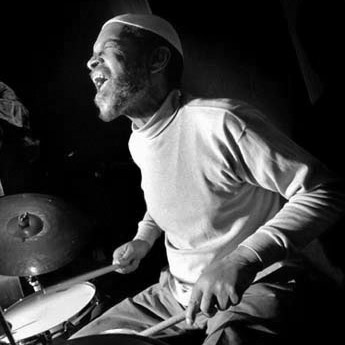
“I switch up between a K. Constantinople and an old Paiste 602 Medium Ride,” says Higgins. “That old Paiste was given to me by Ed Blackwell, so it has a special thing going for it besides its sound. There’s a vibe to it, and I’ve made a lot of very good recordings using that particular cymbal.”
JazzTimes: Do you always favor rivets in a ride cymbal?
Well, yeah, because it gives everybody a cushion. I remember working with Milt Jackson, and sometime if a cat didn’t have a sizzle cymbal, he wouldn’t hire him [laughter]. Because you’re always playing it, it gives a lot to the player and the ensemble, too—it’s like the maître d’ of the drums set. You might never touch a tom-tom, but that cymbal is a big part of your sound.
Higgins' 602 in action:
After the break, discussion of miking, and tuning and playing the bass drum:
Sunday, September 11, 2011
Still loving Sabian AA's
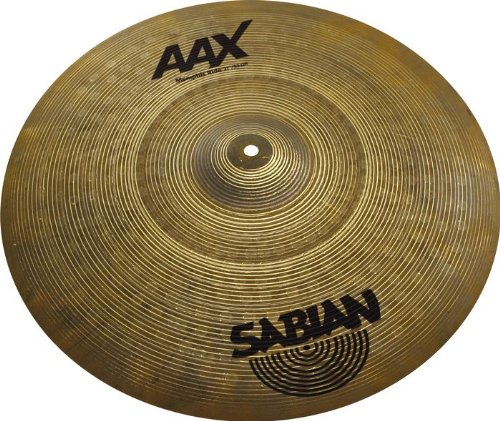
The addition of Zildjian's A Custom line did little to change that impression, though I have come across a few better cymbals. I had heard and played fewer Sabians, but since the manufacturing process is similar, I lumped them in with the A.'s.
No more- the first Sabian AA that got my attention a few years ago was the fast and very mellow El Sabor crash. More recently I picked up a Raw ride, after seeing them at Cymbalsonly.com, and I love it- thin, somewhat dry, and incredibly musical. Then just this week a student picked up one of the new Memphis rides, and I'm blown away even further. This is the perfect medium ride- an old fashioned medium- that is to say, lighter than has been standard since about the 80's. The pitch is high, with nice definition and a lovely harmonious cushion underneath- the sound made me think of the slamming bar bands of the 70's. I actually can't give you a detailed review because I was only able to play it for a few moments in a lesson, but it made a tremendous impression- I wanted to own one instantly.
All of these cymbals all have the classic A. sound- which I can't describe for you; you just have to have heard and played a lot of them- but much more refined than in the past, and much more controllable dynamically. These don't have the darkness or complexity of the hand-hammered K-types, but are fully their equal as musical instruments- using my Raw ride in a jazz setting is no compromise. Think Irish whiskey or a great British session beer compared to Scotch or a Trappist ale. I'm very eager to play another one of these, and to see what else Sabian is up to.
There are a number of YouTube clips of varying sound quality demonstrating this cymbal- one of the better ones is after the break. But I'd really recommend seeking one out and playing it.
Wednesday, August 03, 2011
Transcription: Tony Williams - Madness - ride cymbal only
Madness is the first track I heard on the first Miles Davis record I actually went and bought- before that I just had the old copy of Kind of Blue
 from my dad's record collection. Either my teacher at the time, Tim Stodd, or my brother- probably both- told me this guy Tony Williams was the master of the ride cymbal and I should listen to him. So here's just the ride cymbal from the first 100 or so measures of the tune. The metric modulation in bar 11 is a simple double time, which you will no doubt hear. Swing the 8th notes, of course.


This is inspired by the Vinnie Colaiuta interview- I also used to sleep with this record going, though I didn't use headphones- I just put the turntable on infinite repeat and it would go all night. Usually it was either this record or side 1 of Filles de Kilimanjaro.
There's no YouTube clip of the tune available, but why don't you own it already?
Get the pdf
is the first track I heard on the first Miles Davis record I actually went and bought- before that I just had the old copy of Kind of Blue from my dad's record collection. Either my teacher at the time, Tim Stodd, or my brother- probably both- told me this guy Tony Williams was the master of the ride cymbal and I should listen to him. So here's just the ride cymbal from the first 100 or so measures of the tune. The metric modulation in bar 11 is a simple double time, which you will no doubt hear. Swing the 8th notes, of course. 
This is inspired by the Vinnie Colaiuta interview- I also used to sleep with this record going, though I didn't use headphones- I just put the turntable on infinite repeat and it would go all night. Usually it was either this record or side 1 of Filles de Kilimanjaro.
There's no YouTube clip of the tune available, but why don't you own it already?
Get the pdf
Wednesday, January 19, 2011
Kenny Clarke on the invention of the ride cymbal
...and modern drumming in general, excerpted from Ed Thigpen's Kenny Clarke interview in the Feb. 1984 Modern Drummer. I originally posted this last year on the Drummerworld.com forum.

From Thigpen's introduction:

From Thigpen's introduction:
It's understandably difficult for a young drummer to imagine that the various components of the drumset were ever utilized in a manner unlike the way they are today. In actuality, the approach was, at one time, considerably different, and Kenny Clarke had a whole lot to do with changing it all. His drumming led the way towards usage of the bass drum for accentuation as well as timekeeping; the establishment of a jazz-time rhythm for the ride cymbal, and freedom from a strictly metronomic role, forcing the bassist to share in the responsibility of timekeeping. Kenny Clarke can also be credited with freeing the left hand so it could interact with the soloist—the obvious reason why thousands of young student drummers still sweat over Jim Chapin's Advanced Techniques For The Modern Drummer...
To say that Kenny Clarke was "important,"or "influential, "or even "a key musical figure, "does not do his contribution justice. To state, unequivocally, that he was drumming's all-time Great Emancipator, a man to whom every jazz drummer who's ever lived owes a debt of gratitude, is perhaps a much more honest appraisal.
Subscribe to:
Posts (Atom)